Modern manufacturing demands consistent surface quality and flawless finishing across every product. Industries focus on improving precision, reducing defects, and maintaining high production speed. Advanced robotics now supports these goals by delivering controlled and repeatable finishing processes.
Manufacturers adopt Computerized Polishing Robot systems to achieve uniform surface finishing across complex components. These robots follow programmed paths and maintain consistent pressure during polishing operations. This approach ensures smooth surfaces and high-quality output across production batches.
Manual polishing often creates inconsistency in finish quality and slows down production. Robotic polishing systems solve this challenge by delivering accurate and repeatable performance.
A computerized polishing robot handles intricate shapes and maintains steady motion during operations. It ensures even material removal and consistent surface texture across components. This precision improves product appearance and reduces rework.
Industries gain multiple advantages through robotic polishing.
Robotic systems maintain uniform surface finish across all components.
Automation supports continuous polishing operations and reduces cycle time.
Robots handle repetitive polishing tasks with accuracy and control.
Engineers can monitor and adjust parameters for optimal results.
Many manufacturers also use Buffing and Polishing Robots to enhance finishing processes for metal and engineered parts.
Surface coating requires controlled application and uniform coverage. Manual painting often leads to uneven coating and material wastage. Robotic systems improve this process by delivering accurate and efficient paint application.
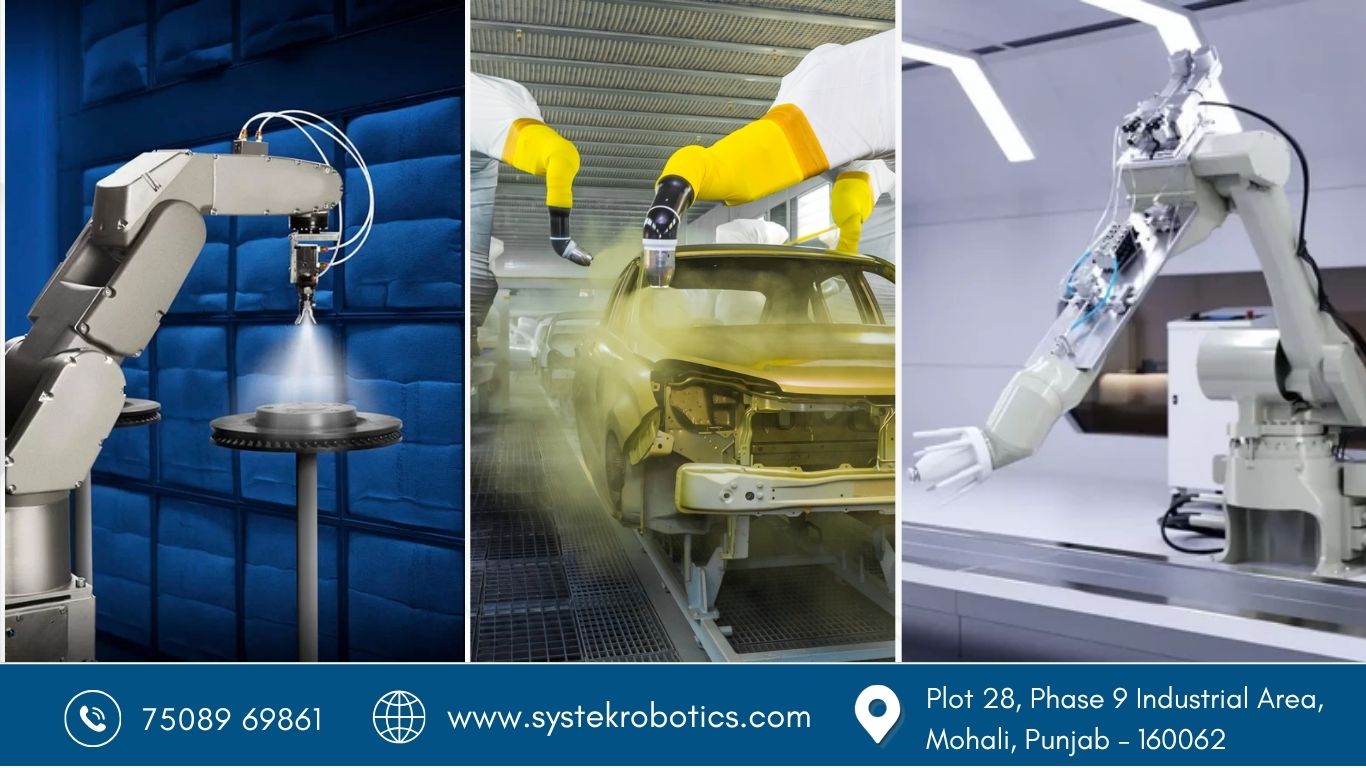
Manufacturers rely on automatic painting robot systems to achieve consistent coating across products. These robots control spray patterns, paint flow, and movement speed with precision. This ensures uniform coating thickness and high-quality finishes.
Automated painting technology improves both efficiency and product quality.
Robots apply paint evenly across surfaces and ensure consistent finish.
Precise control over spray reduces excess paint usage.
Automation supports continuous painting operations and improves throughput.
Robots handle exposure to fumes and chemicals during painting processes.
Industries such as automotive, consumer goods, and manufacturing also adopt industrial painting robots for large-scale and high-precision coating applications.
Manufacturers achieve better results when they integrate polishing and painting systems into a unified workflow. Robotic polishing prepares surfaces with precision, while painting robots apply consistent coatings.
This integration improves coordination between finishing stages and reduces production delays. Engineers design these systems to ensure smooth transition between processes and maintain consistent output quality.
Automation also allows better monitoring and control across finishing operations. This approach improves efficiency and ensures reliable results across production cycles.
Robotic finishing systems transform how industries handle surface treatment and coating processes. Computerized polishing robots improve surface quality, while automated painting robots ensure uniform coating and strong visual appeal.
Businesses that invest in robotic finishing gain higher productivity, better quality control, and reduced operational effort. These technologies create efficient and scalable production environments.
Systek Robotics provides advanced polishing and painting automation solutions designed to match your production requirements. Contact Systek Robotics today to upgrade your finishing processes and achieve consistent, high-quality results.