Manufacturers need faster production, better consistency, and lower labor dependency. A machine tending robot helps factories achieve all three goals. It loads raw material, unloads finished parts, and supports continuous machine operation.
Factories that use CNC machines, injection molding machines, presses, or grinding systems often rely on machine tending robots to increase efficiency. The right robot can improve output, reduce downtime, and create a safer work environment.
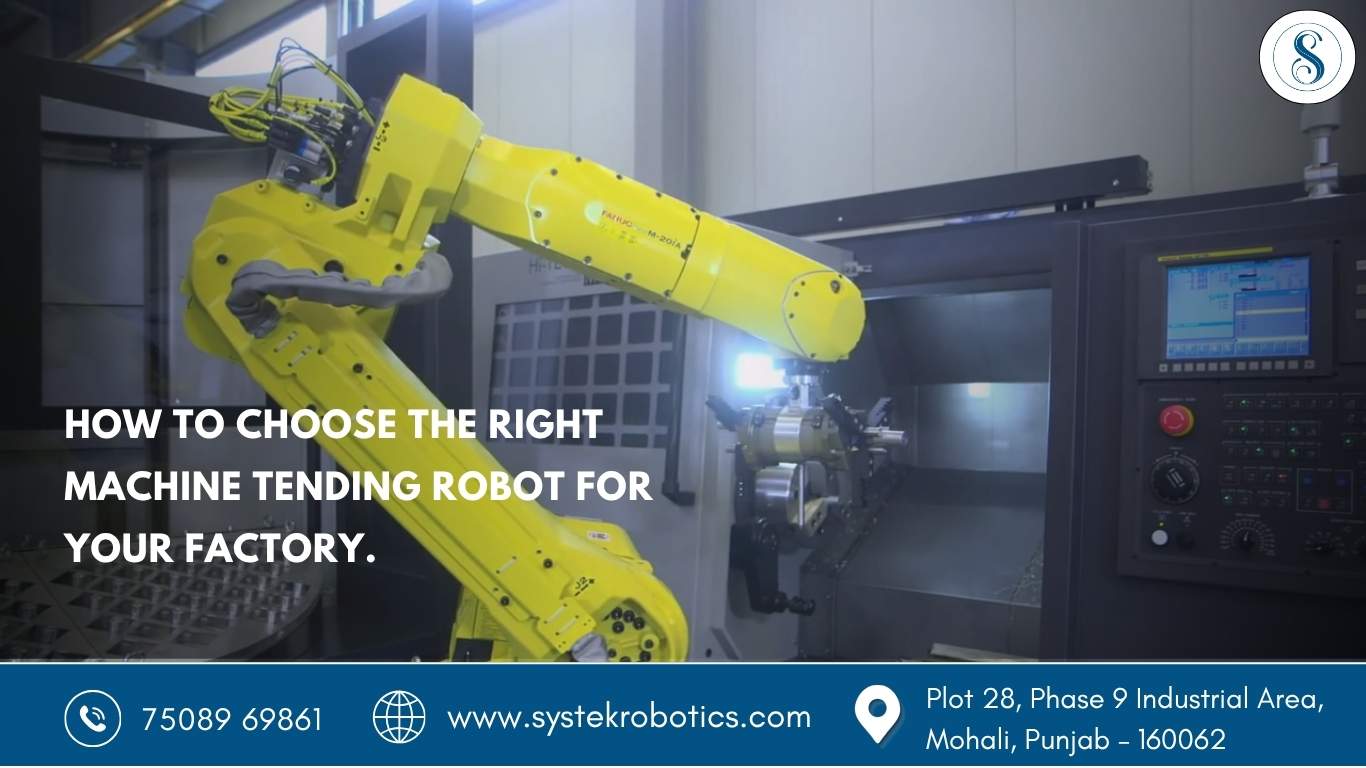
A machine tending robot handles the loading and unloading process for industrial machines. It picks raw parts, places them into a machine, removes completed parts, and prepares the next cycle.
Many factories use machine tending robots with CNC lathes, milling machines, laser cutting systems, die casting machines, and injection molding equipment. Some robots can manage one machine. Others can handle several machines at the same time.
Machine tending robots support repetitive production tasks. They deliver stable performance, improve accuracy, and help factories maintain production targets.
Machine tending robots offer major operational advantages for modern factories.
Robots can work continuously without breaks or shift changes. They keep machines running for longer hours and reduce idle time.
A robot follows the same movement pattern during every cycle. This process reduces errors and helps maintain part quality.
Factories often use heavy parts, sharp tools, and high-temperature equipment. A machine tending robot handles dangerous tasks and lowers the risk of worker injuries.
Many factories struggle with labor shortages and rising labor expenses. A robot can handle repetitive work and allow employees to focus on higher-value tasks.
A well-planned automation system can deliver strong ROI through better productivity, less scrap, and fewer production delays.
Choosing the right robot requires a clear understanding of your production needs, machine setup, and future growth plans.
Start by identifying the machines that need automation. Different machines require different robot configurations.
CNC lathes, vertical machining centers, injection molding machines, presses, and grinding machines all have unique loading and unloading requirements. A robot that works well with one machine may not fit another.
Payload capacity plays a major role in robot selection. You need to know the weight of the raw material, finished component, and end-of-arm tooling.
A robot with low payload capacity may struggle with heavier parts. A larger robot may increase costs if your factory only handles lightweight components.
Robot reach determines how far the robot arm can move. Your robot must reach the machine door, raw material rack, conveyor, and finished parts tray.
A limited working range can slow production. A robot with the correct reach will support smooth movement across the full work area.
Every factory has specific production targets. You need a robot that can match your required cycle time.
Fast production environments often need high-speed robots. Slower applications may work well with standard robotic systems.
Some factories have limited floor space. Compact robotic cells work well in smaller production environments.
Large robotic systems may require additional safety fencing, conveyors, and storage areas. Always evaluate the available space before finalizing your decision.
The gripper is one of the most important parts of a machine tending robot. Different applications require different grippers.
Vacuum grippers work well for flat parts. Mechanical grippers support heavy metal components. Dual grippers can speed up loading and unloading by handling two parts in one cycle.
Your production needs may grow over time. Choose a robot that can support future applications, extra machines, or higher production volumes.
A scalable automation system helps you avoid major replacement costs in the future.
Robot selection is only one part of the process. You also need a trusted automation partner for integration, installation, training, and maintenance.
An experienced robotics company can recommend the right solution based on your machine type, production volume, and factory layout.
The right machine tending robot can transform factory performance. It can improve uptime, increase production, reduce labor dependency, and support better product quality.
Factories should evaluate machine type, payload, reach, cycle time, floor space, and tooling requirements before making a decision. A well-planned machine tending automation strategy can deliver long-term value and help manufacturers stay competitive.
Modern robotic machine tending systems support faster production, lower downtime, and better process control. Robotic CNC machine tending also helps manufacturers achieve higher output with greater accuracy and consistency.
Businesses that invest in Robotic Machine Tending Solutions can improve production efficiency and prepare their factories for future growth.
Looking for the right automation partner for your factory? Systek Robotics delivers advanced machine tending automation, robotic machine tending, and robotic CNC machine tending systems designed for modern manufacturing environments. Contact our team today to explore customized Robotic Machine Tending Solutions for your business.
Automotive, aerospace, metal fabrication, medical device, plastic molding, and electronics industries use machine tending robots.
Yes. Many machine tending robots can service multiple machines in the same production cell.
The cost depends on robot size, payload, tooling, software, safety systems, and integration requirements.
Yes. Small factories can use compact robotic systems for CNC machines, lathes, and molding equipment.
Installation time depends on the complexity of the project. Some simple robotic systems can be installed within a few days, while larger systems may take several weeks.