Efficient machine operation plays a key role in maintaining productivity across manufacturing environments. Many industries struggle with downtime, inconsistent handling, and dependency on manual labour for repetitive tasks. Robotics offers a practical solution that improves workflow and ensures continuous production performance.
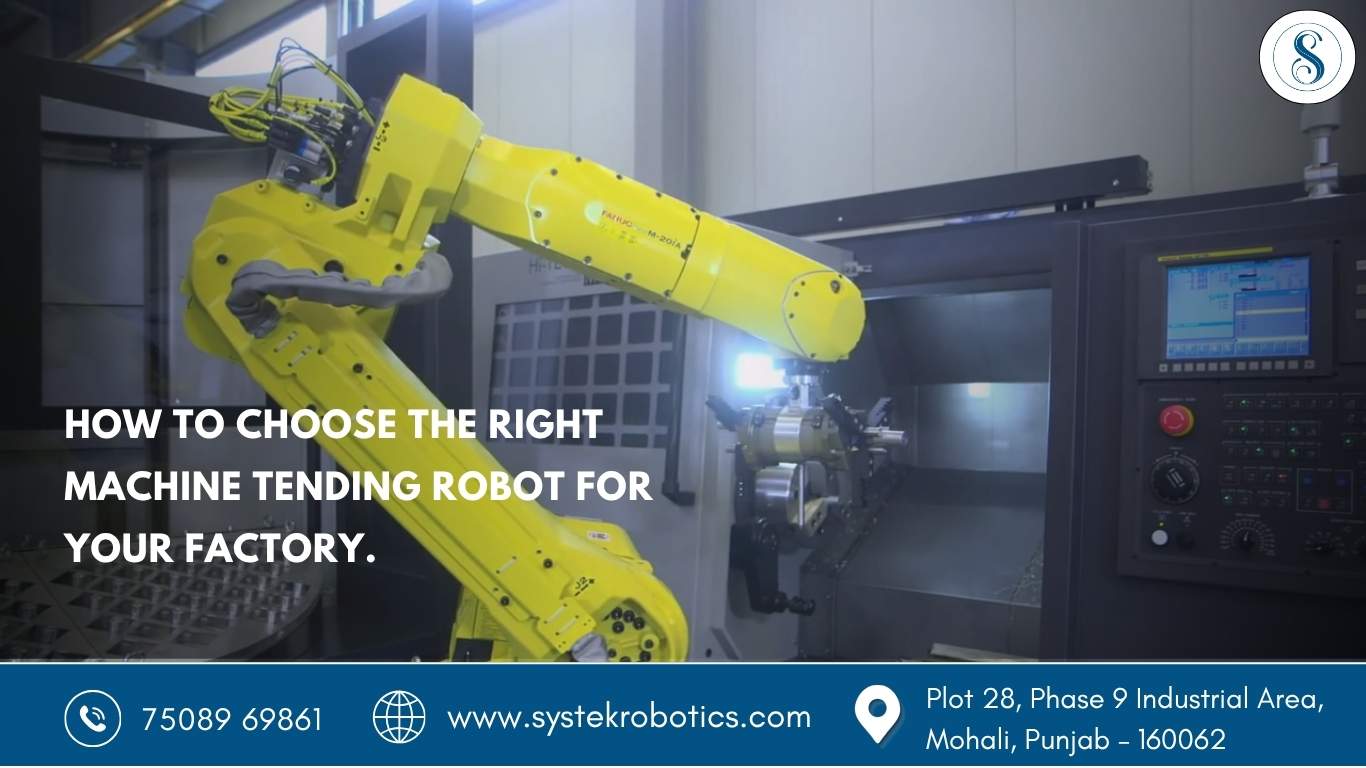
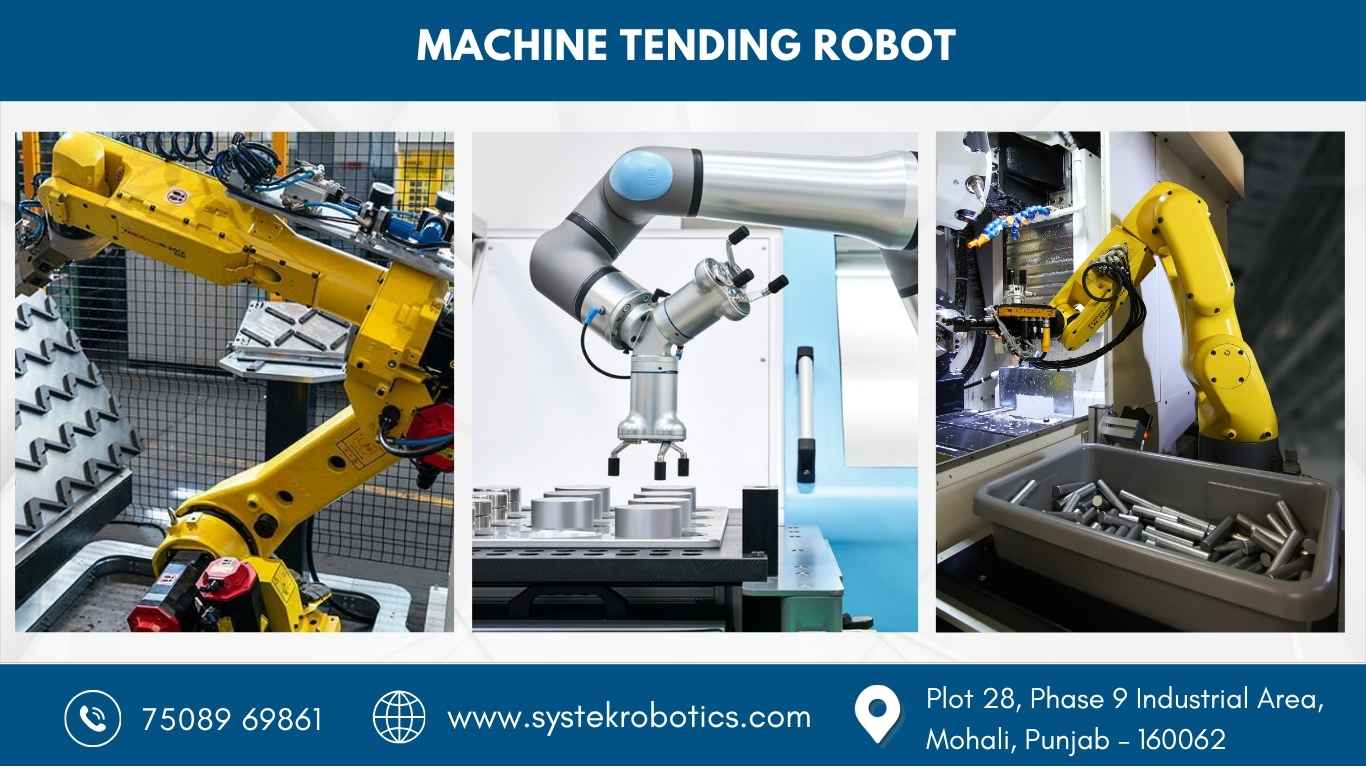
A machine tending robot handles loading and unloading tasks for industrial machines such as CNC machines, lathes, and milling systems. It picks raw material, places it into the machine, and removes finished parts after processing. This automated handling ensures smooth operation and reduces interruptions during production cycles.
Manufacturers use these robots to maintain consistent output and improve machine utilisation across operations.
A machine tending robot follows a programmed sequence to manage tasks with precision. It collects raw material from a conveyor, tray, or storage unit and places it into the machine. After the machining process completes, the robot removes the finished component and places it in a designated area.
Sensors and control systems guide the robot during each step. These systems ensure accurate positioning and safe interaction with machines. Engineers configure these robots based on cycle time, part size, and production requirements.
Machine tending robots deliver strong operational advantages that improve manufacturing performance.
Robots keep machines running continuously and reduce idle time.
Automation ensures accurate handling and minimises variation in production.
Robots manage repetitive tasks that require constant human effort.
Automation reduces direct interaction with heavy or sharp components.
Robotic handling supports steady workflow and improves throughput.
Industries such as automotive, aerospace, and metal fabrication rely on these robots to maintain efficiency.
Machine tending robots require proper planning and system design. Initial setup involves investment in hardware, integration, and programming. Businesses must evaluate production needs before implementation.
Complex parts and irregular shapes may require specialised grippers or additional tooling. Space constraints within existing setups can also affect installation. Skilled support ensures smooth integration and long-term performance.
Selecting the right robot depends on several key factors. Businesses must evaluate production requirements and operational goals before making a decision.
Choose a robot that handles the weight of components and tooling.
Ensure the robot covers the required machine area without limitations.
Match robot speed with machine processing time for efficient workflow.
Select systems that integrate easily with existing machines and automation setups.
Opt for robots that adapt to different part sizes and production changes.
A well-planned selection ensures better performance and long-term reliability.
Machine tending robots transform how industries manage production processes. They improve machine utilisation, reduce downtime, and maintain consistent output across operations. Businesses that adopt this technology gain better control over workflow and achieve higher productivity.
Systek Robotics provides advanced machine tending robot solutions tailored to your production needs. Contact Systek Robotics today to upgrade your manufacturing process and achieve reliable automation performance.