Manufacturing operations demand consistent flow, high speed, and precise material movement across every stage of production. Manual handling creates workload pressure, slows down operations, and increases dependency on labour-intensive tasks. Industries now shift toward automation to strengthen productivity and improve operational control.
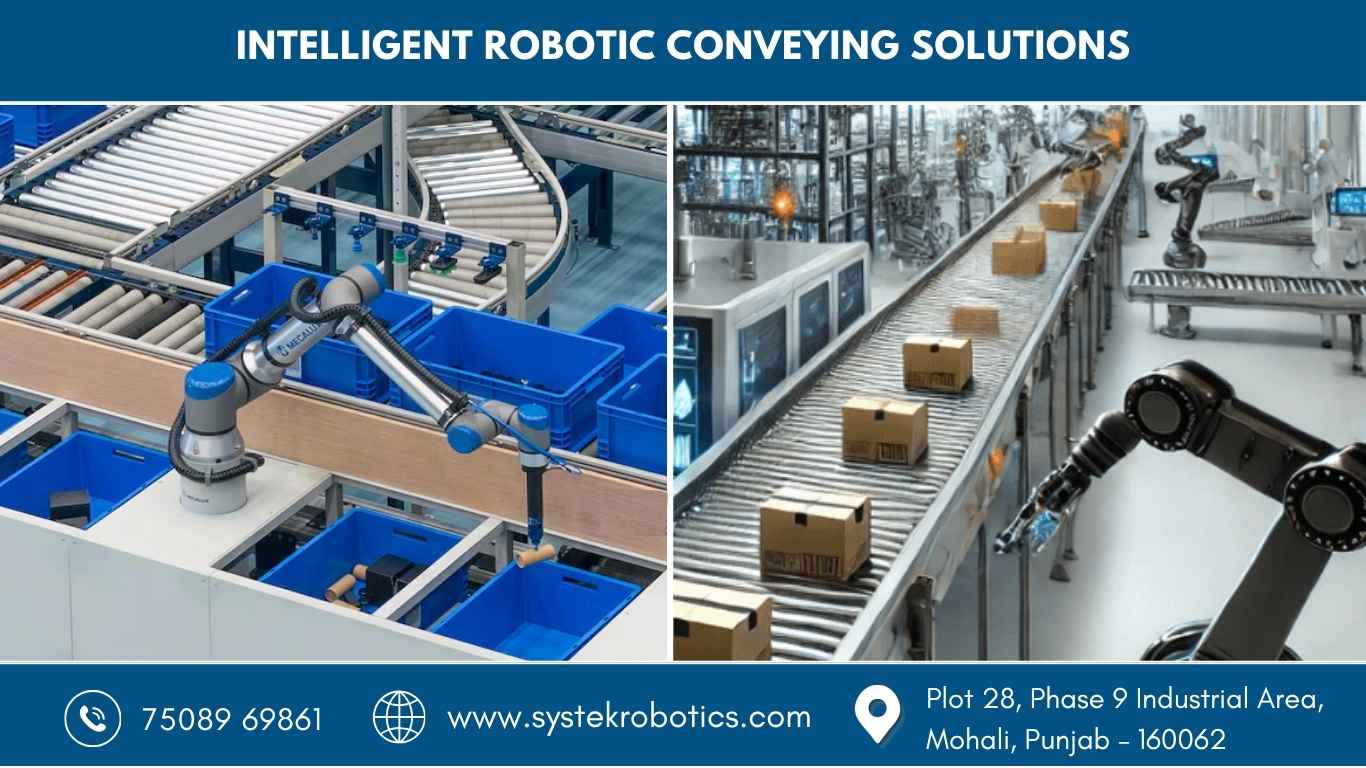
Robotic conveying solutions refer to integrated automation systems that move materials, components, and finished products across different production stages with high accuracy and speed. These systems combine conveyors, industrial robots, sensors, and intelligent control units to create a unified material handling network.
These solutions manage product transfer between machining, assembly, inspection, packaging, and storage zones without manual intervention. They maintain continuous flow and ensure accurate positioning of materials at every stage.
Modern setups often include Smart conveyor systems that support synchronized movement across multiple production lines and improve operational coordination.
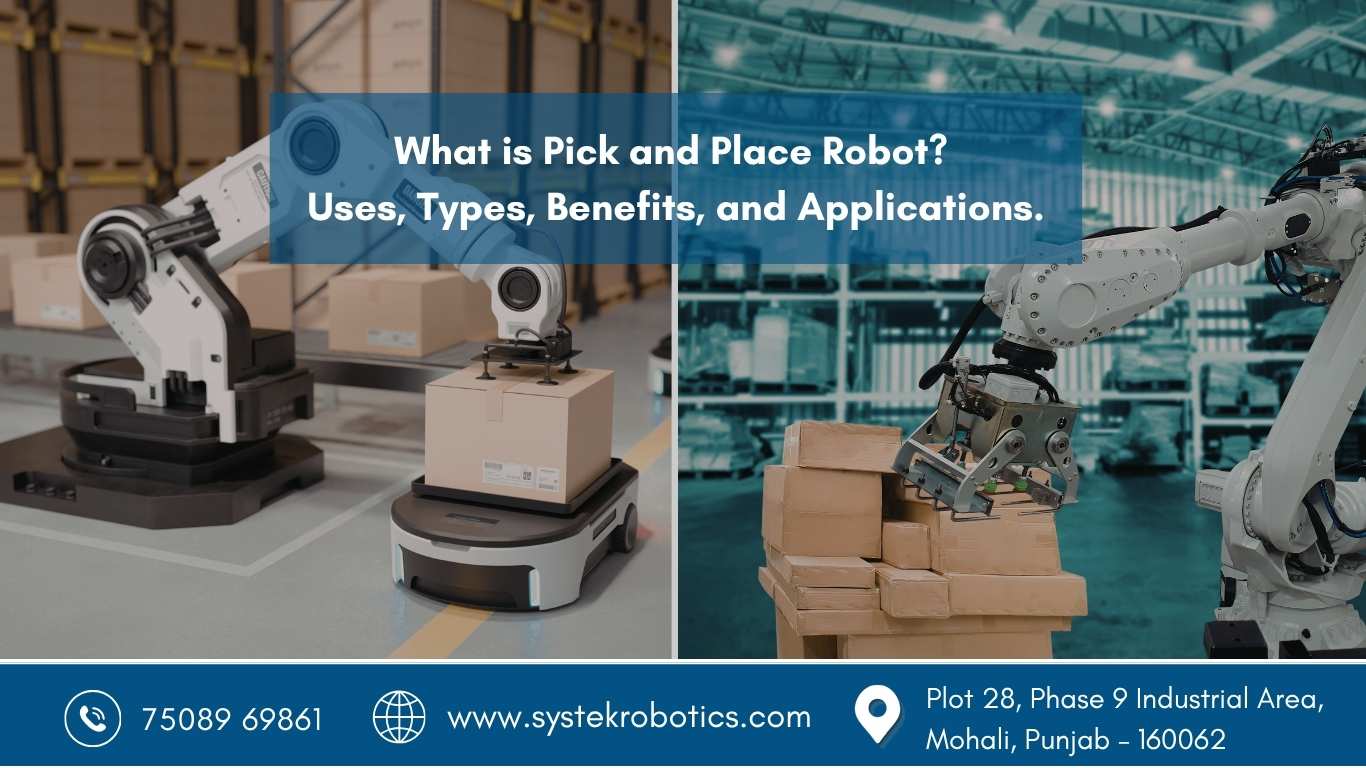
Manufacturing units also integrate Pick and Place robots with conveying systems to improve product handling accuracy. These robots identify items on the conveyor, pick them with precision, and place them at designated locations for further processing or packaging.
Advanced facilities also deploy Vision-integrated conveyors to detect product orientation, size variations, and positioning errors in real time, which improves accuracy and reduces defects.
Some high-end production environments use Dynamic routing conveyors to automatically redirect materials based on production requirements, which increases flexibility and reduces bottlenecks.
Robotic conveying systems support stable production flow, reduce handling time, and improve coordination between multiple workstations. They create a structured environment where materials move efficiently without delays or errors.
Manual material handling consumes time and increases dependency on labour for repetitive tasks. Workers often need to lift, move, stack, and transport products throughout the day. This process slows down production and increases operational costs.
Automation reduces manual effort by handling the movement of materials across the factory floor. These systems improve workflow and ensure products move from one process to another without delays.
Businesses gain better control over production because robotic conveyors maintain steady movement and reduce interruptions. This leads to improved productivity and lower labour costs.
Many industries depend on fast and accurate product movement to maintain efficiency.
Automotive manufacturers use robotic conveying systems to move components, car parts, and finished assemblies between different workstations. These systems support welding, painting, assembly, and packaging operations.
Electronics manufacturing requires careful handling of delicate components. Robotic conveyors help transport circuit boards, devices, and small parts safely between production stages.
Food processing companies use conveying systems to handle packaging, sorting, labelling, and product transfer. Automation improves speed and maintains hygiene standards.
Pharmaceutical manufacturers rely on robotic conveyors for safe movement of medicines, bottles, cartons, and packaging materials. These systems improve traceability and reduce handling errors.
Warehouses use robotic conveying systems for sorting, palletising, packing, and order fulfilment. Automation speeds up product movement and improves storage efficiency.
Robotic conveyors reduce the need for manual handling and repetitive movement of materials. Businesses can lower labour dependency and allocate workers to higher-value tasks.
Automated systems maintain steady product movement across different production stages. This improves throughput and reduces bottlenecks.
Robotic conveyors move products to the correct location with precision. This reduces placement errors and improves coordination between workstations.
Manual lifting and repetitive handling often lead to injuries. Robotic systems reduce physical strain and create a safer work environment.
Many manufacturers combine conveyors with Pick and Place robots to automate sorting, loading, unloading, and packaging. These robots pick products from conveyors and place them accurately at predefined positions.
This combination improves speed, reduces manual effort, and ensures consistent handling across production lines.
Robotic conveying systems support business expansion by handling higher production volumes. Manufacturers can add more conveyors, robotic arms, and stations as demand grows.
Pick and Place robots play an important role in intelligent conveying solutions. These robots identify products, pick them from moving conveyors, and place them in trays, boxes, pallets, or assembly stations.
Manufacturers use Pick and Place systems in packaging, assembly, sorting, and inspection applications. These robots improve efficiency because they operate with speed and precision.
When combined with conveyors, Pick and Place robots create a smooth and continuous workflow. This setup reduces delays and supports higher production output.
Robotic conveying solutions are automated systems that move products and materials across production lines using conveyors, robots, and sensors.
They automate repetitive material movement tasks, which reduces labour dependency and lowers operational costs.
Automotive, electronics, food processing, pharmaceuticals, warehousing, and manufacturing industries use these systems.
Yes. Many manufacturers combine conveyors with Pick and Place robots to improve sorting, packaging, and assembly processes.
Yes. These systems support expansion because businesses can add new conveyors and robotic stations as production demand increases.
Intelligent material handling systems help businesses reduce manual handling costs, improve workflow, and increase productivity. These solutions create faster, safer, and more efficient production environments across industries.
Businesses that invest in advanced conveying automation gain better process control, lower labour costs, and improved production performance. These systems also support Pick and Place applications and prepare manufacturers for long-term growth.
Systek Robotics provides customised conveying automation systems designed to match your production requirements. Contact Systek Robotics today to improve material flow, reduce manual effort, and build a smarter manufacturing environment.